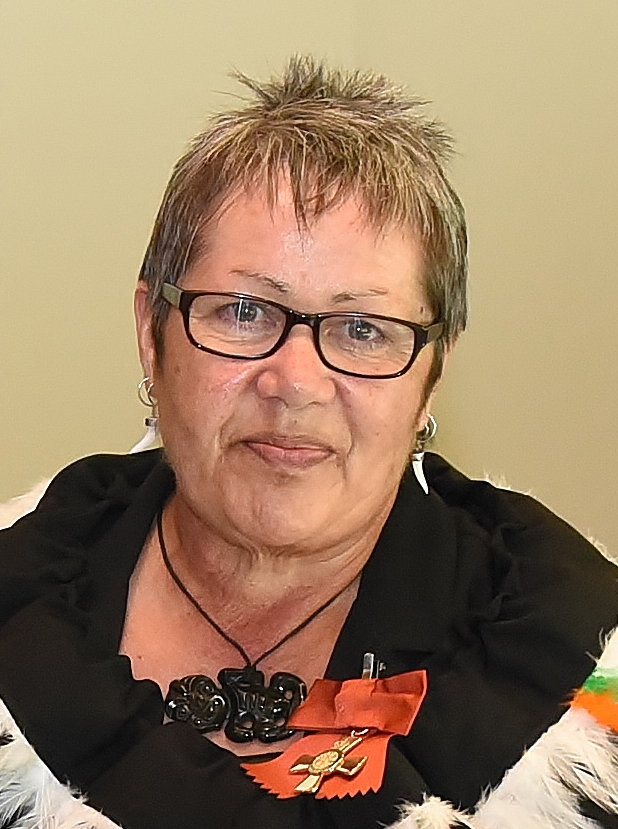
Mere Berryman
Contemporary · Kaupapa Māori Education · Culturally Responsive Pedagogy
One of Aotearoa’s foremost Māori educational researchers. Berryman’s work centres on the relationship between culture, identity, and educational success for Māori students. Her contributions to the Te Kotahitanga programme and the Starpath Project changed what systematic, high-expectation culturally-responsive schooling looks like in practice at scale across New Zealand.
“What Māori students tell us is that they want teachers who care about them enough to set high expectations — teachers who are willing to change what they do to ensure student success, not teachers who expect students to change to suit them.” — Mere Berryman, paraphrasing student voice research
🧑🎓 Biography & Scholarly Context
Associate Professor Mere Berryman (Ngāti Awa) is one of Aotearoa’s most influential education researchers. Based at the University of Waikato’s Te Kotahi Research Institute, her research career has focused on understanding and improving the educational experiences and outcomes of Māori students — both in mainstream and Māori-medium settings.
Her early career involved working directly in schools alongside Russell Bishop on the Te Kotahitanga project — one of the largest and most sustained evidence-based programmes to improve Māori student achievement in mainstream New Zealand secondary schools. The programme’s core insight was radical: rather than asking Māori students to “fix” their relationship to schooling, it asked teachers to fix their pedagogical relationships with Māori students.
Berryman has also collaborated on international research, examining how indigenous and minority communities in Canada, the United States, and Aotearoa approach culturally responsive and sustaining education. Her theoretical grounding combines Kaupapa Māori principles with contemporary educational research on culturally responsive pedagogy. She is a strong voice for the centrality of student and whānau voice in school reform.
🌳 Core Kaupapa Māori Principles Berryman Applies
✨ Te Kotahitanga: The Programme that Changed New Zealand Schools
Te Kotahitanga (2000–2015)
Te Kotahitanga began as a research project listening to Māori students’ own explanations of their educational experiences. Students consistently described the biggest obstacle to their achievement as their relationships with teachers — specifically, teachers with low expectations, who did not know them as Māori people, and who managed their behaviour rather than engaged their intellects.
Based on these narratives, Bishop and Berryman developed a professional development programme built around sustained coaching and observation cycles in which teachers learned to implement an “Effective Teaching Profile” — one characterised by high expectations, genuine caring, shared control of learning, and explicit use of Māori cultural contexts. Over its lifespan, the programme worked with over 400 schools and significantly improved Māori student engagement and achievement outcomes.
A key feature: the programme refused to position Māori students as the problem. The locus of change was explicitly and entirely with teachers and schools. This was both theoretically grounded (in Kaupapa Māori and Critical Race Theory) and practically significant: it changed the professional development conversation from “how do we fix these students?” to “how do we change our teaching?”
🏫 Classroom Implications for Aotearoa Teachers
- Know your Māori students as Māori students — not as generic learners who happen to be Māori. Learn their iwi, their whānau contexts, their strengths, their identities. This is the foundation of whanaungatanga.
- Set the same high expectations for every student — Berryman’s research is unequivocal: Māori students say they want teachers with high expectations who believe they are capable of excellence. Low expectations disguised as “meeting students where they are” is deficit thinking.
- Position culture as an asset, not a problem — integrate te reo, tikanga, and Māori worldviews into your learning programme authentically. Not as tokenism or special occasions, but as normal and valued.
- Listen to student and whānau voice — run conversations with Māori students and their whānau about what is and isn’t working. Their expertise about what helps them learn is data. Treat it as such.
- Share control of learning — the Effective Teaching Profile asks teachers to give students genuine agency over aspects of their learning. Not chaos — structured choice within clear expectations.
- Interrupt deficit discourse in your school — when colleagues explain Māori underachievement through family deficit, attitude, or motivation, offer Berryman’s reframe: the question is always “what do we need to change so this student succeeds?”
📚 Academic References
-
Bishop, R., Berryman, M., Cavanagh, T., & Teddy, L. (2007). Te Kotahitanga: Improving the educational
achievement of Māori students in mainstream education. Phase 2: Towards a whole school approach.
Ministry of Education Report.
🎓 Google Scholar ↗ -
Berryman, M., Eley, E., & Copland, M. (2018). Culturally responsive and sustaining education:
Berryman’s Aotearoa framework. Journal of Education Policy, 33(1).
🎓 Google Scholar ↗ -
Berryman, M., Lawrence, D., & Lamont, R. (2018). Cultural relationships for responsive pedagogy: A
bicultural mana orite dialogue. NZCER Press.
🎓 Google Scholar ↗ -
Bishop, R., & Berryman, M. (2006). Culture Speaks: Cultural relationships and classroom learning.
Huia Publishers.
🎓 Google Scholar ↗ -
Ministry of Education NZ. (2013). Ka Hikitia — Accelerating Success 2013–2017: The Māori
Education Strategy. Ministry of Education.
🎓 Google Scholar ↗