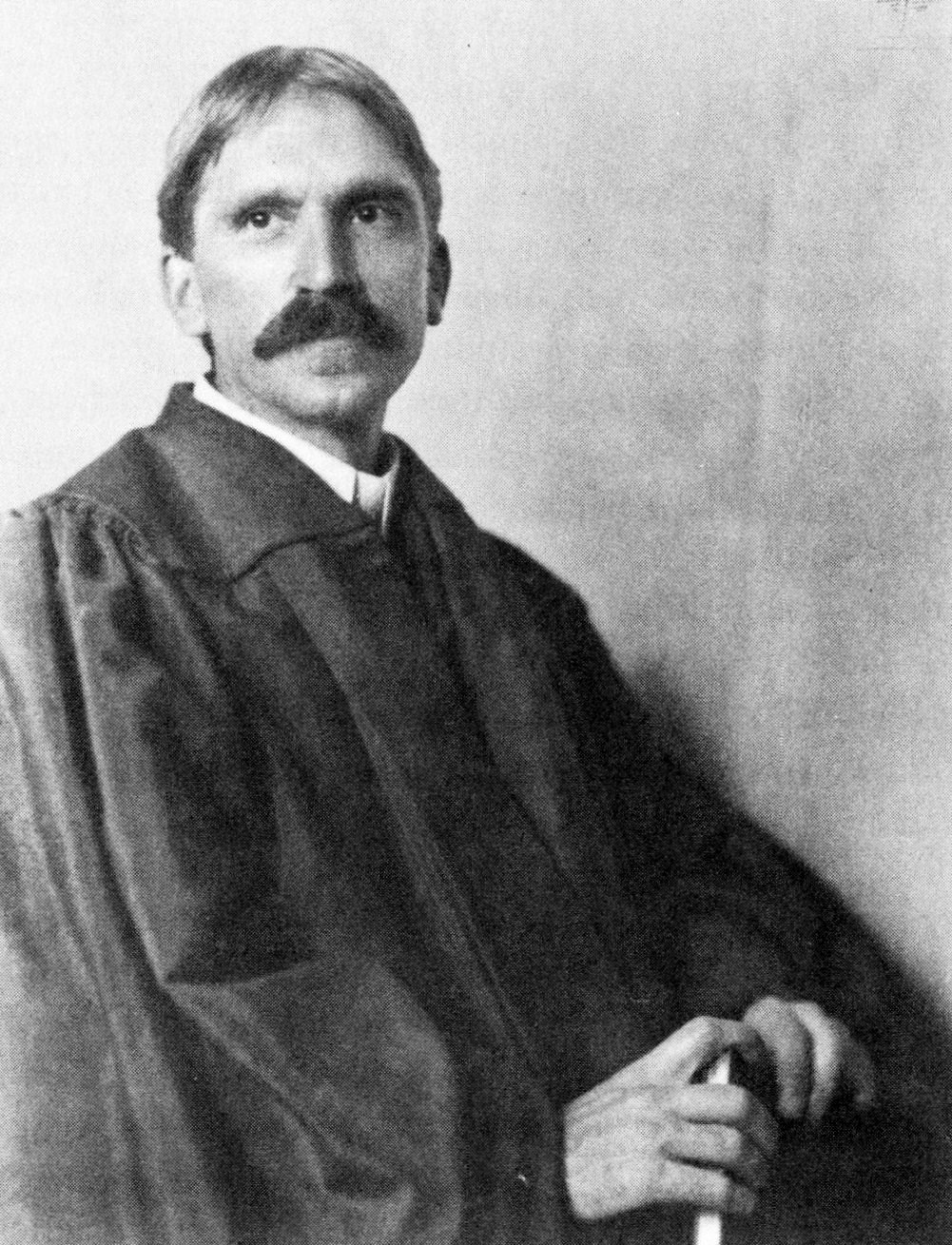
🏛️ John Dewey
Photo: Eva Watson-Schütze · Public domain
Who Was He?
John Dewey was an American philosopher, psychologist, and educational reformer whose influence on progressive education is unparalleled. Writing and teaching from the late 19th century through the mid-20th, his work defined the philosophical and practical foundations of experiential, student-centred, and inquiry-based education.
Dewey argued that education was not preparation for life — it was life itself. Schools should be democratic communities where students actively construct knowledge through experience, reflection, and problem-solving. This vision, radical in his day, became the intellectual foundation for inquiry learning, project-based learning, experiential education, and much of what we now consider progressive pedagogy.
💡 Still Relevant in Aotearoa
Dewey's influence flows through the NZC's key competencies and vision of the "capable young person," through inquiry-based social studies, and through the emphasis on real-world learning throughout the curriculum. Te Kete Ako's own project-based resources reflect Deweyan principles of learning through authentic, meaningful engagement with the world.
Key Contributions
- Experience and Education (1938) — The mature statement of Dewey's theory: not all experience is educational; genuine education involves continuity (building on past experience) and interaction (engagement with environment). The educator's role is to structure genuinely educational experiences.
- Democracy and Education (1916) — His major work: education as the primary vehicle for democratic society. Citizens of a democracy must be able to think critically, engage with others' perspectives, and act on evidence. Schools must model democratic community.
- The Laboratory School — Dewey established an experimental school at the University of Chicago (1896–1904) where his theories were tested in practice — one of the earliest serious attempts to ground educational theory in empirical research.
- Inquiry-Based Learning — The five-stage model of reflective thinking: (1) felt difficulty, (2) location and definition of difficulty, (3) suggestion of possible solution, (4) development of solution reasoning, (5) testing. This became the foundation for all subsequent inquiry learning frameworks.
Core Ideas
Learning as Experience
Knowledge is not transmitted from teacher to student — it is generated through active engagement with the world. Students who do, touch, build, investigate, and reflect learn more deeply than students who passively receive information. Experience is the source of all genuine learning.
Education as Democratic Practice
Democracy requires citizens who can think, deliberate, and collaborate. Schools that use authoritarian methods produce submissive citizens, not democratic ones. The classroom should model the society we aspire to — cooperative, deliberative, respectful of evidence and difference.
The Child and the Curriculum
Neither pure child-centredness (follow the child wherever they want to go) nor pure curriculum-centredness (deliver the prescribed content regardless of the child) is adequate. The teacher's task is to connect the child's immediate experience and interests to the structured knowledge of the curriculum.
Classroom Implications
- Prioritise genuine problems over contrived exercises. Units built around real questions students care about — local, authentic, meaningful problems — produce deeper learning than abstract exercises.
- Build in reflection. Experience alone is not educational. Dewey's model requires structured reflection: what happened? What does it mean? What would I do differently? Without this, experience remains merely experience.
- Create democratic classroom structures. Student voice in how the class operates, how learning is structured, and how assessment works is not progressive indulgence — it is preparation for citizenship.
- Connect to community. Learning that engages the community beyond the school walls — through visits, interviews, projects, service — is more Deweyan than textbook-based instruction.
Critical Lens
Dewey's work has been critiqued from multiple directions:
- Idealism about democracy: Dewey's vision assumed a relatively equal society. Critics (including Freire, hooks) note that progressive pedagogy can reproduce inequalities if it ignores how unequal societies shape what counts as "experience."
- Practical implementation: Genuine inquiry-based learning requires significant teacher skill, time, and institutional support. It can be coopted into superficial "activity" learning without the depth Dewey intended.
- Cultural limitations: Dewey wrote from within a Western, liberal-democratic tradition. His framework does not naturally incorporate Indigenous epistemologies or the knowledge systems of non-Western cultures.
Academic References
- Dewey, J. (1916). Democracy and Education: An Introduction to the Philosophy of Education. Macmillan. · Google Scholar ↗
- Dewey, J. (1938). Experience and Education. Kappa Delta Pi. · Google Scholar ↗
- Dewey, J. (1910). How We Think. D.C. Heath. (Foundations of reflective inquiry.) · Google Scholar ↗
- Kolb, D.A. (1984). Experiential Learning: Experience as the Source of Learning and Development. Prentice-Hall. (Dewey's direct intellectual heir.) · Google Scholar ↗
- Biesta, G., & Burbules, N. (2003). Pragmatism and Educational Research. Rowman & Littlefield. Contemporary interpretation. · Google Scholar ↗
Mātauranga Māori Lens
Dewey's core insight — that learning emerges from purposeful experience in real contexts, not from transmission of abstract facts — resonates with how mātauranga Māori has always worked: knowledge is embedded in practice, in place, in living relationship with the natural world and the community. His insistence that school must connect to the lived community of learners is the Western pedagogical equivalent of tūrangawaewae-based learning: you cannot separate the learner from the place that grounds them.
Dewey's democratic education ideal — communities learning together through shared inquiry — mirrors the wānanga tradition: collective deliberation as both process and outcome of learning. His concept of experiential continuity (each experience building meaningfully on the last) is the structure of whakapapa applied to knowledge: each new learning is connected genealogically to what came before. Dewey placed kaitiakitanga-like responsibility at the centre of democratic education: citizens (and students) are not passive receivers of culture but active shapers of it.
🌿 Use this in classroom
Design at least one unit per term around a genuine community or environmental question — not a simulated project, but actual inquiry into something real. Dewey's project method and the Māori concept of ako as community learning are natural partners. Ask: what does our local whenua need? What does our hapū need to understand? Real questions produce real whanaungatanga.