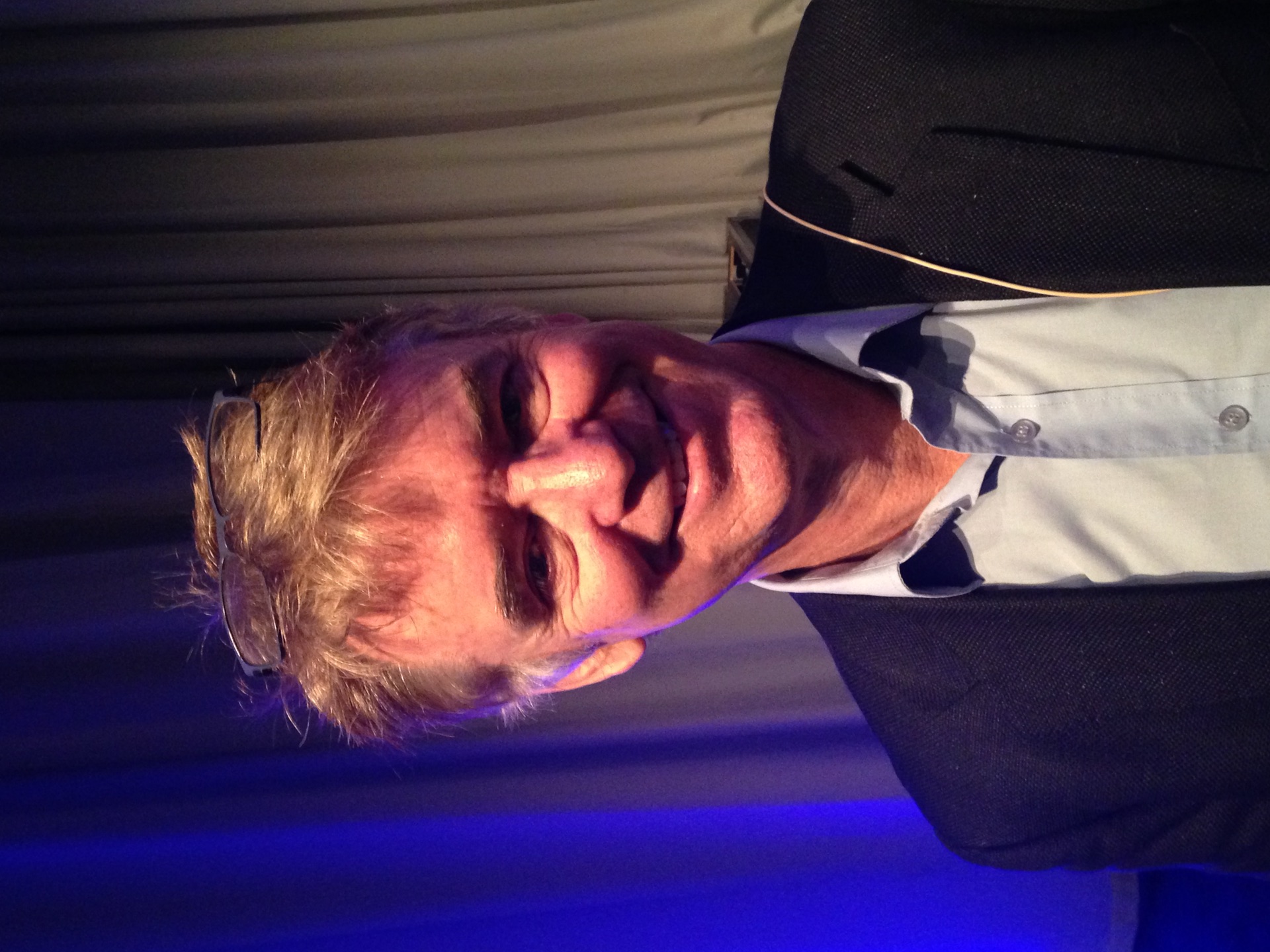
John Hattie
1950 – present · Evidence-Based Education · Meta-Analysis
The most cited education researcher of his generation. Hattie's Visible Learning project synthesised over 1,400 meta-analyses — covering 300 million+ students — to identify what actually makes a difference to learning outcomes, shifting education discourse from intuition to evidence.
"The single most important thing you can do for a student is to know thy impact — know what you are doing, why you are doing it, and what difference it is making." — John Hattie, Visible Learning for Teachers (2012)
🧑🎓 Biography & Context
John Hattie was born in Timaru, Aotearoa New Zealand in 1950 and educated at the University of Otago and the University of Toronto. After decades of teaching and research roles in New Zealand and Australia, he joined the University of Melbourne where he led the Melbourne Education Research Institute. He is now Emeritus Laureate Professor there.
What distinguishes Hattie from most educational researchers is his use of meta-analysis of meta-analyses — a statistically rigorous approach he called mega-analysis. Rather than conducting new studies, he aggregated thousands of existing ones, calculating a single standardised measure (the effect size, Cohen's d) across interventions to enable direct comparison. His 2009 book Visible Learning — sometimes described as "the Holy Grail of teaching" by The Times Educational Supplement — synthesised 800 meta-analyses. By the second edition (2023), that number exceeded 1,400, covering 300+ million students.
Hattie's central provocation is that almost everything works in education — the average effect size of all studied interventions is d=0.40. The question is not "does it work?" but "does it work better than alternatives?" His hinge point of d=0.40 separates zone of desired effects from what he calls "the zone of developmental effects."
📊 The Visible Learning Framework
Hattie's framework rests on a single question: What does learning look like when it is made visible? He argues that learning is most powerful when teachers see learning through the eyes of their students and students see themselves as their own teachers.
📈 Selected Effect Sizes (d)
Hattie ranks hundreds of influences. Here are some of the most relevant for Aotearoa classrooms:
Zone of desired effects = d ≥ 0.40 | Developmental effects = d 0.15–0.40 | Reverse effects = d < 0
🌿 Aotearoa NZ Context
Hattie's work has had enormous influence in Aotearoa, both positively and problematically. The Ministry of Education's Teaching as Inquiry cycle (found in Te Kete Ipurangi and the NZC) draws directly on Hattie's emphasis on evaluating impact. The Spirals of Inquiry model (Timperley, Kaser & Halbert) is a Māori-centred adaptation.
Hattie's research directly informed Ka Hikitia implementation — particularly the emphasis on high expectations and evidence of impact for Māori learners. The relationship dimension (d=0.72) aligns closely with Māori values of whanaungatanga (relationship) and manaakitanga (care and respect).
However, critics including Mere Berryman and Russell Bishop point out that Hattie's database is predominantly Western and does not adequately represent research on indigenous learners. Effect sizes derived from predominantly Pākehā or American samples may not transfer directly to Māori contexts without cultural adaptation.
Hattie's framework has been critiqued by Pasi Sahlberg, Pierre-Jérôme Bergeron, and Yong Zhao for methodological issues: averaging effect sizes across vastly different studies, ignoring variance, and elevating a single number as the arbiter of "what works." Hattie's 2012 claim that class size reduction "doesn't work" is particularly contested. For Aotearoa teachers: use Hattie as a useful prompt for reflection, not a ranking system to follow uncritically.
🏫 Classroom Implications for Aotearoa Teachers
- Use learning intentions and success criteria explicitly — share them at the start of every lesson in student-accessible language. Ask students to explain back what they are learning and why.
- Prioritise feedback over grades — give feedback at the task and process level before assigning a score. Grades often end the learning conversation; feedback opens it.
- Develop your own evidence of impact — use formative assessment data, exit tickets, or short pre/post checks to track whether students are actually learning (not just engaged).
- Invest in collective efficacy — the highest leverage point is not individual teaching strategies but whether your staff team collectively believes they can make a difference for every student.
- Teach metacognition explicitly — help students understand how they learn, not just what they are learning. This is especially powerful for Māori students who may have been told they are not "academic."
- Question the hype — Hattie's effect sizes are averages. Your context matters. Use the data as a starting point for professional inquiry, not a recipe.
📚 Academic References
-
Hattie, J. (2009). Visible Learning: A synthesis of over 800 meta-analyses relating to achievement.
Routledge.
🎓 Google Scholar ↗ -
Hattie, J. (2012). Visible Learning for Teachers: Maximizing impact on learning. Routledge.
🎓 Google Scholar ↗ -
Hattie, J., & Timperley, H. (2007). The power of feedback. Review of Educational Research, 77(1),
81–112.
🎓 Google Scholar ↗ -
Hattie, J., & Zierer, K. (2018). 10 Mindframes for Visible Learning: Teaching for success.
Routledge.
🎓 Google Scholar ↗ -
Bergeron, P-J., & Rivard, L. (2017). How to engage in the pseudoscience of Visible Learning. McGill
Journal of Education, 52(1), 239–251.
🎓 Google Scholar ↗ -
Timperley, H., Kaser, L., & Halbert, J. (2014). A framework for transforming learning in schools:
Innovation and the Spiral of Inquiry. Centre for Strategic Education.
🎓 Google Scholar ↗