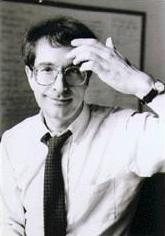
Howard Gardner
1943 – present · Multiple Intelligences · Theory of Mind
Howard Gardner’s 1983 theory of Multiple Intelligences was a direct challenge to the notion that intelligence is a single, measurable quantity (IQ). By arguing that there are at least eight distinct intelligences, he gave educators a framework for understanding why students who seem to “fail” in traditional academic terms may be extraordinarily capable in other domains — and why curricula that only honour linguistic and logical-mathematical intelligence systematically miss and marginalise many learners.
“The biggest mistake of past centuries in teaching has been to treat all children as if they were variants of the same individual and thus to feel justified in teaching them all the same subjects in the same way.” — Howard Gardner, Intelligence Reframed (1999)
🧑🎓 Biography & Context
Howard Gardner was born in 1943 in Scranton, Pennsylvania. He studied at Harvard under Jerome Bruner and Erik Erikson, completing his PhD in developmental psychology in 1971. His early career was shaped by working simultaneously with two radically different populations: brain-damaged adults (at the Boston Veterans Administration Medical Center) and gifted children (at Project Zero at Harvard). This unusual juxtaposition — seeing the astonishing variety of ways cognition can be lost or expressed — planted the seeds of Multiple Intelligences theory.
His 1983 book Frames of Mind: The Theory of Multiple Intelligences revolutionised popular and professional thinking about intelligence. The initial seven intelligences (linguistic, logical-mathematical, spatial, bodily-kinesthetic, musical, interpersonal, intrapersonal) were joined by an eighth — naturalist — in 1999. Gardner has since considered and ultimately rejected two further candidates: existential intelligence and pedagogical intelligence.
Gardner spent his entire career at Harvard, where he is the John H. and Elisabeth A. Hobbs Research Professor of Cognition and Education. While deeply influential in education, he has consistently noted that his theory was intended as a scientific hypothesis about the structure of the mind — not as an instructional prescription — and has expressed discomfort with some of its classroom applications.
🧠 The Eight Intelligences — With Aotearoa Resonance
Gardner proposed eight criteria for an intelligence. Each is listed here with its relevance to Te Ao Māori and Pacific knowledge systems.
📋 Gardner’s Criteria for an Intelligence
Gardner did not arbitrarily list intelligences. He proposed eight criteria that any candidate intelligence must meet. These grounds the theory in cognitive science:
- Potential isolation by brain damage — damage to specific brain areas destroys specific capacities (e.g., lesions to Broca’s area destroy language while leaving music intact).
- Existence of savants, prodigies, and exceptional individuals — people with dramatic peaks in one area confirm domain-specificity.
- Identifiable core operation(s) or set of operations — each intelligence has specifiable mental operations at its core.
- Evolutionary history and plausibility — can be mapped to adaptive functions in ancestral environments.
- Evidence from psychometric findings — patterns of correlations in intelligence testing support the existence of relatively distinct factors.
- Support from experimental psychological tasks — experimental evidence of dissociation between domains.
- Distinctive developmental history — each intelligence has its own developmental trajectory from novice to expert.
- Susceptibility to encoding in a symbol system — each intelligence can be expressed through a culturally evolved symbol system (language, numbers, musical notation, dance notation).
🌿 Aotearoa NZ Context
Gardner’s Multiple Intelligences theory has profound resonance in Aotearoa. Traditional Māori knowledge systems honour a much wider range of intelligences than Western academic schooling typically validates. Kaitiakitanga (naturalistic intelligence), whakairo (spatial and bodily-kinesthetic), waiata and haka (musical, linguistic, bodily-kinesthetic), and whanaungatanga practices (interpersonal) are all domains of sophisticated knowledge that mainstream schools have systemically undervalued in Māori students.
The New Zealand Curriculum’s emphasis on key competencies — particularly “using language, symbols, and texts,” “relating to others,” and “thinking” — implicitly draws on a broader range of intelligences than traditional schooling. Gardner’s framework provides theoretical grounding for the importance of the arts, physical education, garden-to-table programmes, and cultural practices in the curriculum.
Multiple Intelligences theory has been heavily critiqued by cognitive psychologists. John White (2006) and Waterhouse (2006) argued that Gardner’s evidence base is weak, that the criteria for intelligence are vague or inconsistently applied, and that multiple intelligences cannot be clearly distinguished from talents or aptitudes. Susan Weinbrenner argues the theory has been frequently misapplied — used to “label” students as particular intelligence types, which becomes its own form of fixed-category thinking. The most important lesson from Gardner may not be “identify student intelligences” but “broaden your conception of what counts as intelligence and capability.” Importantly, Hattie’s meta-analysis found low effect sizes for MI-based instructional approaches.
🏫 Classroom Implications for Aotearoa Teachers
- Broaden your definition of achievement — a student who is extraordinary at carving, kaitiakitanga, or community leadership has demonstrated real intelligence. How does your assessment system honour this?
- Use MI as expansiveness, not labelling — do NOT use MI to sort students into intelligence types. Use it to expand the range of entry points, forms of engagement, and ways to demonstrate understanding in your classroom.
- Design multimodal learning experiences — offer students movement, music, debate, art, outdoor learning, and collaborative tasks alongside written and logical-mathematical work.
- Recognise te reo and tikanga as genuine intelligences — Māori cultural expertise is not a “nice addition” to school — it represents sophisticated linguistic, naturalistic, bodily-kinesthetic, and interpersonal intelligence.
- Challenge the narrowing effect of high-stakes testing — NCEA and other standardised assessments primarily reward linguistic and logical-mathematical intelligence. Be explicit with students that this is a narrow lens on a wide set of capabilities.
- Connect to kaitiakitanga in science and social studies — environmental stewardship connects to naturalistic intelligence and is a powerful entry point for Māori and Pasifika students.
📚 Academic References
-
Gardner, H. (1983). Frames of Mind: The Theory of Multiple Intelligences. Basic Books.
🎓 Google Scholar ↗ -
Gardner, H. (1999). Intelligence Reframed: Multiple Intelligences for the 21st Century. Basic Books.
🎓 Google Scholar ↗ -
Gardner, H. (1993). The Unschooled Mind: How children think and how schools should teach. Basic
Books.
🎓 Google Scholar ↗ -
Waterhouse, L. (2006). Multiple intelligences, the Mozart effect, and emotional intelligence: A critical
review. Educational Psychologist, 41(4), 207–225.
🎓 Google Scholar ↗ -
White, J. (2006). Intelligence, Destiny and Education: The ideological roots of intelligence testing.
Routledge. [Critical analysis]
🎓 Google Scholar ↗