🕘 Lesson at a Glance | Te Hōtaka
Lesson Overview | Tirohanga Whānui
In this lesson ākonga meet the science of a warming Antarctica and its physical connection to Aotearoa, then use kaitiakitanga as a lens to weigh our responsibilities. They build the key kupu themselves, interrogate real climate data, and watch the RNZ documentary "Antarctica in a Warming World" with a clear purpose.
Learning Intentions | Ngā Whāinga Ako
- Explain Antarctica's role in global climate systems and how it physically connects to Aotearoa.
- Analyse real scientific data (sea-level and ice figures) to describe likely impacts on our coastline.
- Apply kaitiakitanga to evaluate our responsibilities as kaitiaki in a warming world.
⚡ Do Now
⏱ 5 minOn the board, one number: 54 metres.
- How tall is 54 metres? (2 min) Sketch it, or name something that height. (Hint for the kaiako: ≈ a 15–18-storey building — or a touch taller than Tāne Mahuta, our largest living kauri at ~51 m.)
- Now the reveal (3 min): 54 m is roughly how much the sea could rise if Antarctica's ice melted. In your book, write one thing it makes you wonder, and one way it might reach us here in Aotearoa.
Activity 1 · Kupu — Building Meaning
⏱ 15 minWhat it is: Instead of copying definitions, ākonga build their own working understanding of the four kupu that run through this whole unit — then test it against real examples.
Run it
- Predict (4 min): In pairs, ākonga get the four kupu — kaitiakitanga, whakapapa, Papatūānuku, mauri — and write what they think each means from any prior knowledge. No looking up.
- Match (5 min): Hand out the four scenario cards (real science from this lesson). Pairs match each kupu to the scenario it best illuminates and say why.
- Confirm & refine (6 min): Whole-class kōrero — the kaiako confirms each kupu's meaning and ākonga refine their working definition in their own words.
🪶 Mātauranga: working meanings for all four kupu, and guidance for running the match, are now written into the Kupu & Scenario Cards kaiako guide. They are a general teaching framing, not iwi-specific knowledge — ask your kaiako Māori or local marae how these words are used in your rohe and let that reading lead. The activity design is ready; the cultural content is yours to write.
Activity 2 · Read the Data — He Aha Kei Te Tupu i Te Tonga?
⏱ 20 minWhat it is: Antarctica can feel far away, but its ice directly shapes Aotearoa's coastline. Ākonga interrogate the real figures behind this unit — starting with the 54 m from the Do Now — and turn the data into their own words.
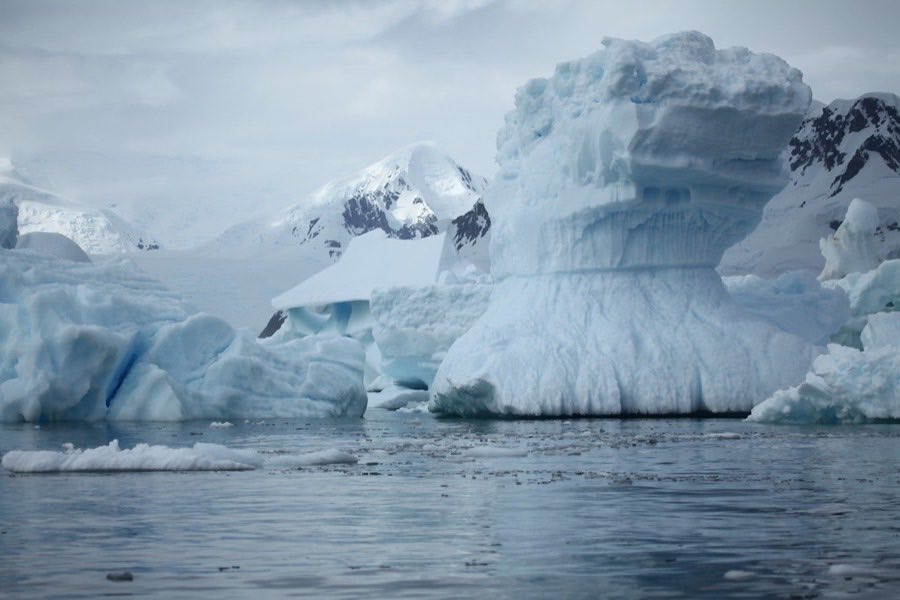
Ngā raraunga · The numbers — read each card with your pair:
🧊 The ice holds a lot of sea
The Antarctic Ice Sheet locks up about 54 metres of potential sea-level rise — more than Greenland (~7 m) and every mountain glacier on Earth (~0.5 m) combined. Its most vulnerable part, the West Antarctic Ice Sheet, could alone raise global seas by up to 5 metres if it collapses.
🇳🇿 NZ scientists are racing to find out how fast
In 2025 a New Zealand–led team (the SWAIS2C project) drilled through half a kilometre of ice and pulled up a 228-metre core of mud and rock from beneath the ice sheet — physical evidence of when Antarctica's ice melted in past warm periods, used to predict when it might again.
🌊 What it means for our coast
NZ sea level is projected to rise 0.11–0.25 m by 2050 and 0.53–0.94 m by 2100 (middle-of-the-road emissions). Because parts of NZ are also sinking, some areas face closer to 1 m by 2100 — and Wellington could reach 30 cm by ~2040, decades earlier than once thought.
🔄 The connection isn't simple
Counter-intuitively, fresh meltwater pouring off Antarctica cools the ocean surface to the south-east of New Zealand (Pauling et al., 2025), shifting our currents and weather. Antarctica and Aotearoa are physically bound together through the Southern Ocean.
Run it — interrogate the data
- Rank (5 min): In pairs, order the four facts by how soon they affect your community. Be ready to justify your top choice.
- Translate (4 min): Pick one figure and rewrite it so a Year 5 student would understand it — keep the number, change the words.
- Question (3 min): Which fact most surprised you, and what does it make you want to find out next? Add it to the wonderings from the Do Now.
🪶 Mātauranga connection (to be authored with kaumātua): the ocean physically binds Antarctica (Te Tonga) and Aotearoa — a real entry point for whakapapa between places. The science earns the framing. Treat whakapapa here as relationship between places rather than a claim about any particular iwi, and localise it with your kaiako Māori.
Activity 3 · The Documentary — Watch with Purpose
⏱ 25 minWhat it is: The anchor text of this lesson — an 18-minute RNZ documentary on a warming Antarctica. Ākonga watch it actively, capturing evidence on the observation sheet, not passively.
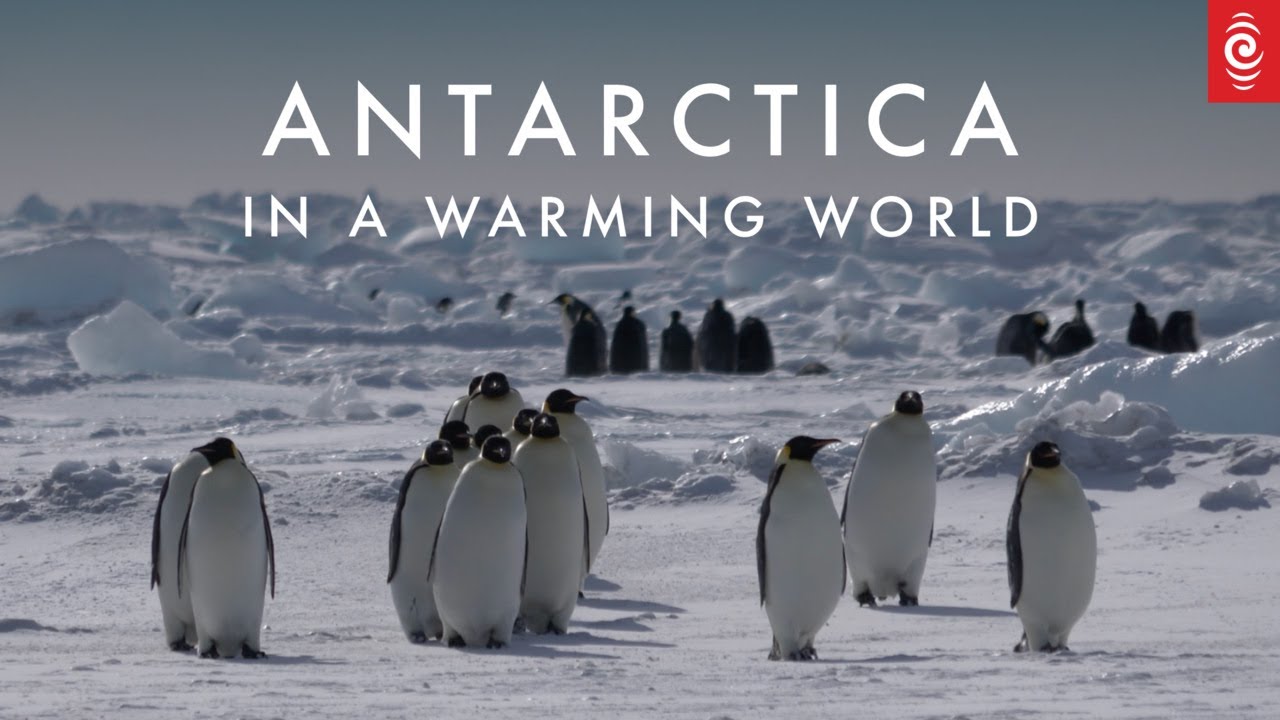 ▶
Antarctica in a Warming WorldOpens on RNZ in a new tab ↗
▶
Antarctica in a Warming WorldOpens on RNZ in a new tab ↗
Run it — before / during / after
- Before (3 min): Hand out the Documentary Observation Sheet. Set the purpose: "You're hunting for EVIDENCE — specific changes, numbers, and places — not opinions." Read the four columns together so ākonga know what to capture.
- During (~18 min): Play the documentary. Ākonga log evidence as they watch — what is changing, the data shown, questions it raises, and connections to Aotearoa. Pause once at the halfway mark for a 20-second pair check ("got an entry in every column yet?").
- After (4 min): In pairs, compare sheets — find one piece of evidence your partner caught that you missed. Then star the single change that worries you most as a kaitiaki; you'll carry it into Activity 4.
Activity 4 · Kaitiaki Synthesis — Pulling It Together
⏱ 20 minWhat it is: Ākonga bring the lesson together — the kupu, the data, and the documentary evidence — into a short kaitiaki response to the one change that matters most to them.
Run it
- Choose (3 min): Each ākonga takes the change they starred on their observation sheet in Activity 3 — the one that worries them most as a kaitiaki.
- Build (12 min): Using the four kupu and the real data, write or sketch a short kaitiaki response: what is happening (evidence + a figure), why it matters (which kupu it touches), and one action we could take here in our community.
- Share (5 min): A few ākonga share; the class notes common threads — these feed the unit's Kaitiaki Action Plan in later lessons.
🪶 Mātauranga: the kaitiaki framing — what kaitiakitanga asks of us and how the kupu shape a genuine response — is set out in the Kupu & Scenario Cards kaiako guide as a starting point, to be localised with your kaiako Māori. The activity scaffold is ready; the cultural depth is yours. (No karakia is scripted in this unit — if you want one to open or close, ask your kaiako Māori or kaumātua; that choice is theirs.)
Exit · Quick Check — He Aha i Mau i a Koe?
⏱ 5 minOn a slip or in their book, each ākonga finishes these three sentences before they leave:
- The data card that surprised me most, and what I didn't expect:
- How I'd explain to my whānau that Antarctica's ice reaches Aotearoa's coast:
- The change I starred in the documentary, and why it worries me as a kaitiaki:
🎯 Curriculum Links | Te Hononga ki te Marautanga
This lesson's focus: Students explore Antarctica's role in global climate systems and apply kaitiakitanga (environmental guardianship) and whakapapa (interconnectedness) to understand our shared responsibility for Papatūānuku and the climate.
Earth Systems — Core Connection (Phase 4 | Years 9–10)
"Matter cycles and energy transfers occur within and between Earth’s spheres through global systems, such as the water and carbon cycle."
📑 View the full verified Te Mātaiaho curriculum alignment for this unit → — Phase 4 · Years 9–10 (statements pulled verbatim from the live curriculum).
📦 Materials & Resources
🎥 Primary Resource
Documentary: "Antarctica in a Warming World" (18 minutes)
Producer: Magpie Content Creation
Supported by: Antarctic Science Platform
📋 Handouts & Worksheets
- Antarctica Kupu Cards — used in Activity 1 (Kupu)
- Antarctica Data Cards — used in Activity 2 (Read the Data)
- Documentary Observation Sheet — used in Activity 3 (Documentary)
- Kaitiaki Scenario Analysis Template — used in Activity 4 (Synthesis)
🛠️ Equipment & Setup
- Projector/screen for documentary
- Reliable internet connection
- Coloured markers/pens
- Scenario cards (printed)
- Reflection booklets
🔗 Extension Resources
📊 Assessment Framework
This is a single lesson, so assessment here is formative — reading for learning as it happens. The unit's summative assessment sits at the end of the unit, not in this lesson.
What to look for, mapped to the learning intentions
- Reading the data (LI 2): in Activity 2, can ākonga rank the data cards and justify the order, and put a figure in their own words? The Translate task is the quickest tell.
- Antarctica–Aotearoa connection (LI 1): on the observation sheet (Activity 3) and in the exit ticket, do they name specific evidence — a number, a place — and tie it to our coast, not just "climate change"?
- Kaitiakitanga (LI 3): in the Activity 4 synthesis, does their kaitiaki response use a real figure, name the kupu it touches, and land on one action?
🚀 Extension Activities
🔬Science Extension
Research specific climate data from Antarctic research stations. Create graphs showing temperature and ice mass changes over time. Predict future trends and their global impacts.
🌿Social Action Extension
Develop a school or community campaign promoting kaitiakitanga principles in response to climate change. Include practical actions and Māori perspectives on environmental stewardship.
🗣️Cultural Connection Extension
Interview kaumātua or local environmental groups about traditional Māori approaches to environmental change and adaptation. Compare with modern climate science approaches.
Before you ask: approach kaumātua through your kaiako or whānau, explain that it is for your science class and what will be shared, and record or quote them only with their clear yes. They choose whether they are named, they can withdraw anything they said at any time, and their knowledge remains theirs — your summary shares it only as they agreed.
🔗 Unit Progression & Next Steps
This lesson serves as a foundational element in a comprehensive 8-lesson climate change unit that integrates Māori worldviews with environmental science. Students will build on today's understanding throughout the unit:
Lesson 2: Local Climate Impacts
Connecting global Antarctic changes to local NZ environments and communities
Lesson 3: Mātauranga Māori
Traditional Māori environmental knowledge and modern science integration
Lessons 4-7: Action & Solutions
Youth climate activism, community solutions, and practical kaitiakitanga projects
Lesson 8: Reflection
Personal commitment and ongoing kaitiaki journey planning
Preparation for Next Lesson: Students should reflect on local examples of climate change they've observed in their community to bring to Lesson 2.
📋 Teacher Planning Snapshot
Ngā Paearu Angitū — Success Criteria
- ✅ I can explain how Antarctica's ice connects to Aotearoa's coastline. (LI 1)
- ✅ I can read the sea-level and ice figures and say what they mean for us. (LI 2)
- ✅ I can give a kaitiaki response to one change, using a real figure and a kupu. (LI 3)
Differentiation for this lesson
- Reading the data: pair confident and developing readers for the data-card ranking; offer a sentence frame for the Translate task ("This means that…").
- Kupu / ELL: pre-teach the four kupu (kaitiakitanga, whakapapa, Papatūānuku, mauri) with the Kupu Cards in Activity 1; allow kōrero in a first language before writing.
- Climate kōrero: climate anxiety is real — frame kaitiakitanga as agency, not doom. The synthesis and exit deliberately end on action, not fear.
Broader differentiation and the unit-wide mātauranga framing live on the unit overview.