Whānau · Family
- Who or what gives your whānau strength when you face challenges?
- What tikanga or practices connect you back to your tūrangawaewae?
- Complete together: “Ko ______ taku ______. He taonga ki ahau nā te mea ______.”
Identity Map Interview Handout · Years 7–10
Print this handout for your ākonga or save it as a PDF to share with whānau.
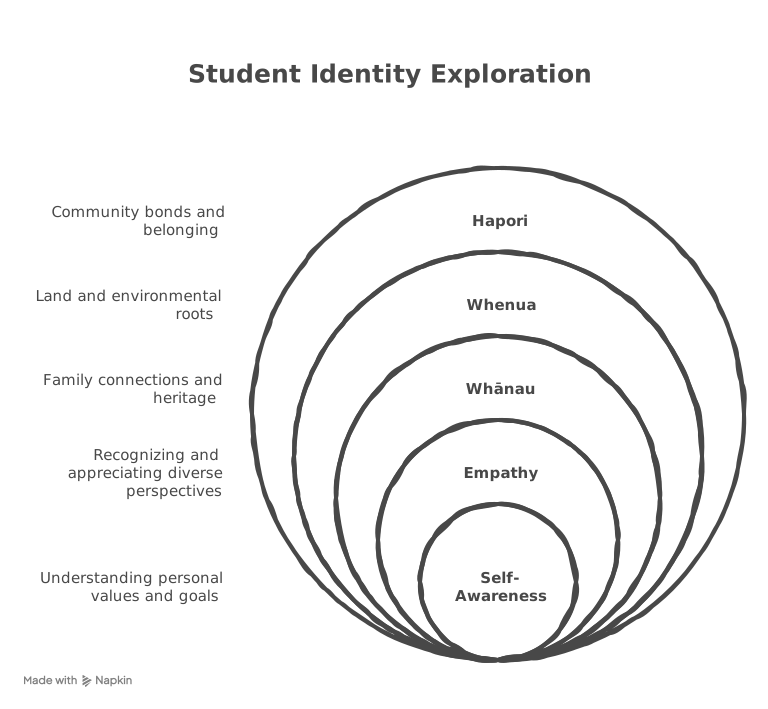
This interview captures the stories, values, and hopes that your whānau carry. You will kōrero with a whānau member (parent, caregiver, grandparent, auntie/uncle, older sibling, or chosen family member) and map their insights alongside your own identity work.
Bring this handout to your interview, record short notes in the spaces provided, and return with one action you will take to honour the kōrero. Mauri tū, mauri ora!
Name & relationship
Kāinga, marae, phone, zoom...
Before your interview, note what each anchor means to you so you can open the conversation and set the tikanga.
Who walks beside me and gives me strength?
Which places anchor me? How do I stay connected?
Who is in my circle of care? How do we look after each other?
Who guides me today and what futures am I working toward?
Use these pātai during your interview. Jot keywords, full sentences, or sketch icons that remind you what was shared.
Design one way you will keep the kaupapa of this interview alive. Who will you share with? What will you do differently at kura, kāinga, or in your hapori?
My commitments for this week
“Ehara taku toa i te toa takitahi, engari he toa takitini.” — My strength is not that of an individual, but that of the collective.
Draw visual symbols from this kōrero (and add your own) to show the connections you want to carry forward.
Icons include: 🌊 Moana (journeys) · ⛰️ Maunga (strength) · 🪶 Manu (messages) · 🔥 Ahi Kā (home fires) · ⭐ Pou (guiding values) · 🎶 Waiata (whakapapa waiata) · 🌿 Rongoā (healing) · 🌀 Koru (growth/return).
Curriculum links: Tangata Whenuatanga, Whanaungatanga, Mātauranga Māori, English speaking/listening (Years 7–10).
Level 3–4: Investigate social, cultural, environmental, and economic questions; gather and evaluate evidence from diverse sources; communicate findings and reasoning clearly for different audiences and purposes.
Level 3–4: Read, interpret, and evaluate information texts; write clearly and purposefully for specific audiences; apply critical thinking skills to evaluate sources and construct well-reasoned responses.
Reflect on your learning. What was the most important idea? What question do you still have?
This resource sits within a kaupapa that recognises mātauranga Māori as a living knowledge system with its own frameworks, values, and ways of understanding the world. The New Zealand Curriculum calls for learning that reflects the bicultural partnership of Te Tiriti o Waitangi, which means every subject area has an obligation to engage authentically with Māori perspectives — not as cultural decoration but as substantive contributions to how we understand our topics. The concepts of manaakitanga (care for others), kaitiakitanga (guardianship), whanaungatanga (relationship and belonging), and tino rangatiratanga (self-determination) provide a values framework applicable across all learning areas, and all are relevant to the work in this handout.
This handout is designed to be used alongside other resources in the same unit. Related materials are linked in the unit planner. All content is provided — no additional preparation is required to use this handout in your classroom.